
Canada Wildfire Update: Where Things Stand

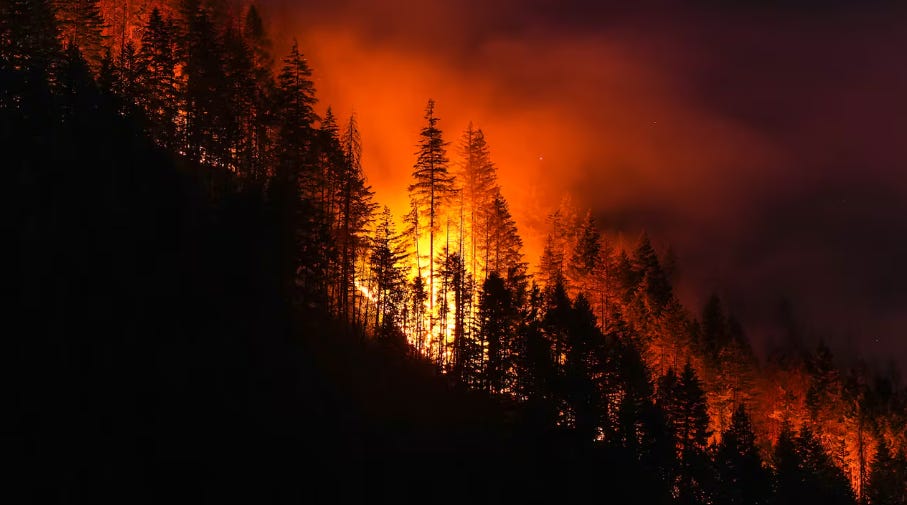
Canada remains deep in another difficult wildfire season.
As of today, more than 5,000 firefighters and nearly 300 waterbombers have been mobilized across the country to battle the fires.
There are currently 954 active wildfires burning across Canada. Of those, 261 are receiving what’s known as a “full response.”
A full response means governments are throwing every available resource at a fire. That can include the Canadian Armed Forces, international firefighters, emergency funding, specialized aircraft, and other federal and provincial resources.
The remaining fires are either being monitored or receiving a modified response. That doesn’t mean they are being ignored. In many cases, these fires are burning in extremely remote parts of Canada, far from towns, cities, highways, or critical infrastructure. In those situations, allowing a fire to burn under careful monitoring can sometimes be the safest and most effective approach.
Of the 261 fires receiving a full response, 138 remain out of control, 40 are being held, and 83 are under control.
More than 80 of the out-of-control fires are in northern Ontario, where firefighters continue to face extremely challenging conditions.
So far this year, Canada has recorded 3,851 wildfires, slightly above the five-year average of 3,739 for this point in the season.
One thing that’s worth clearing up every wildfire season is what people mean when they say a fire was started by “human error.”
A human-caused wildfire can be something as simple as an ATV driving through dry grass, a piece of farm equipment overheating, sparks from a train, a discarded cigarette, an unattended campfire, or a vehicle parked over tall grass. These are all common ignition sources when forests and grasslands become exceptionally dry.
At the same time, it’s important to remember that the majority of wildfires in Canada are started by lightning, particularly the very large fires that burn across remote northern forests. Lightning is, and has long been, Canada’s single biggest source of wildfire ignitions.
What has changed is the environment those fires are burning in.
Scientists have found that climate change is contributing to hotter temperatures, longer periods of drought, lower soil moisture, and longer wildfire seasons. Those conditions make it easier for fires, whether started by lightning or people, to spread faster, burn hotter, and become much more difficult to control.
Finally, wildfire season also brings an unfortunate wave of misinformation.
Every year, claims circulate online suggesting politicians are deliberately setting fires, that governments are secretly spraying forests with chemicals designed to make them ignite, or that the fires are part of some coordinated conspiracy.
There is no credible evidence to support any of those claims.
Wildfires are complex natural disasters driven by weather, fuel conditions, topography, and ignition sources. Investigators determine the cause of individual fires, and while human-caused fires certainly occur, there is no evidence supporting the more extreme conspiracy theories that regularly circulate online.
As always, if you live in or near an area affected by wildfires, follow evacuation orders immediately, pay attention to updates from local emergency officials, and avoid activities that could accidentally start a fire during periods of extreme fire danger.
Like last year, I’ll continue providing regular updates on Canada’s wildfire situation throughout the season.
If you value the work I do here and across my other platforms, please consider becoming a paid subscriber. Your support helps make this work possible and allows me to continue providing updates and reporting on the stories that matter most.
Thanks for being here. I truly appreciate every single one of you and your support.
Cole is indispensable daily information. I’m a subscriber obviously
So appreciate the information you provide